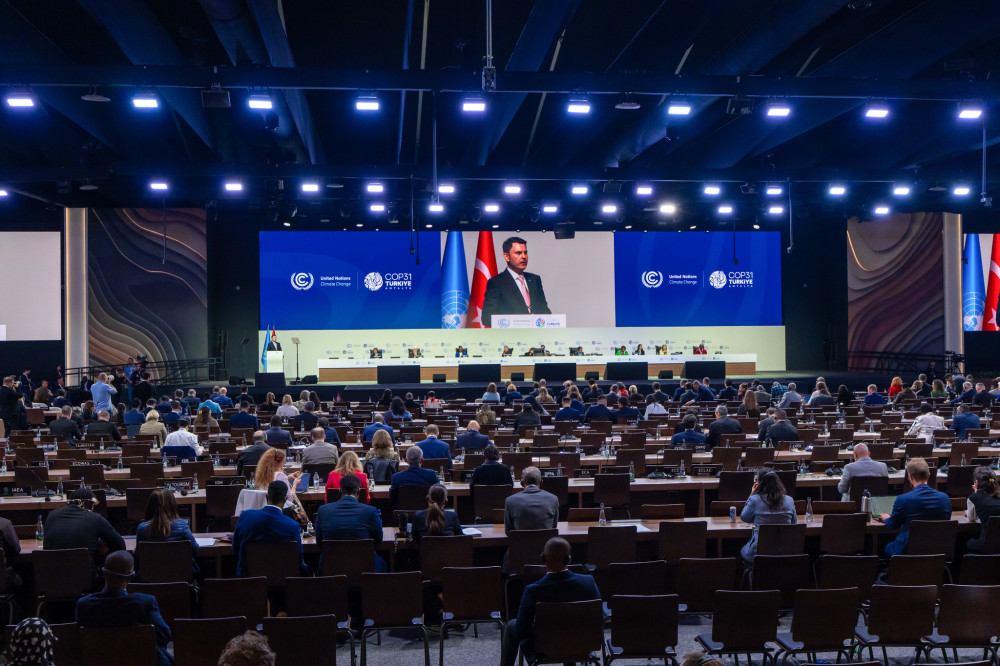
Photo: © UN Climate Change – Kubilay Ciftci
COP31 in Antalya ended on Sunday, two days behind schedule, without the rapid emissions cuts the science demands. The talks overran after a disagreement over whether fossil fuels would be mentioned in the final text at all.
The COP31 Presidency's proposed cover decision showed some limited progress: greater recognition of the risks of overshooting 1.5°C, a stronger role for science and the IPCC, and a welcome focus on the ocean. But it left glaring gaps on transitioning away from fossil fuels, strengthening resilience and getting more finance to developing countries. The roadmaps on fossil fuels and forests launched under the COP30 Presidency were not even recognised or welcomed, and there was a worrying emphasis on carbon capture technologies, which are no substitute for cutting emissions.
A significant group of developing and developed countries objected to the lack of ambition, and the text was rejected. WWF supports this brave move in light of a weak outcome.
The EU held the line on fossil fuels
Among those that refused to accept a weak text was the European Union, which stood its ground and insisted that fossil fuels be named. As WWF EU put it, a climate deal that fails to confront fossil fuels is like a plan to quit smoking that refuses to mention cigarettes.
WWF also regrets the EU's continued opposition to increasing adaptation finance for lower-income countries. Europe is the fastest-warming continent and has just lived through another exceptional wildfire season, so it should understand the cost of inaction better than anyone.
"The EU was right to hold the line in Antalya. A climate deal that cannot even name fossil fuels cannot protect people in our region or anywhere else. Now it is the turn of leaders in Central and Eastern Europe to show the same clarity and support in their own countries for phasing out fossil fuels, and to stand firmly behind the EU position. Words in Antalya must become decisions in Bucharest, Budapest, Sofia and Bratislava. The same goes for electrification: the technologies are ready and the momentum is there, and what is missing is stronger investment signals. Governments in our region should use the national and regional partnership plans for the next EU budget to fund the electrification of industry, transport and buildings," Ana-Maria Seman, Regional Programme Lead for Climate and Energy, WWF Central and Eastern Europe.
Electrification: the momentum is real
Electrification was Antalya's one tangible outcome and should be followed by stronger actions, including investment commitments. The Presidency's voluntary 35-by-35 pledge to lift electricity from about 23% to 35% of global final energy use by 2035 gathered 90 countries and the EU's endorsement. However, the pledge sits outside the negotiated text, does not require the power to be clean and replaces no fossil fuel roadmap.
Reaching the EU's 32% reference for 2030 needs 1.4 percentage points every year, and transport, at about 2%, is furthest behind. However, the economic case it real as the Commission's indicative 46% target in final energy use by 2040, committed to in July through the Electrification Action Plan, could cut fossil fuel imports by €260 billion a year.
New mechanisms and finance pledges for electrification were also made at the COP: a $1.2 billion finance coalition for developing economies, a tracking mechanism and utility plans for $156 billion a year in grids, renewables and storage. For countries in the CEE region, however, the key instrument currently at hand is the future EU budget and the national partnership plans that will allocate it.
The 2028–2034 EU budget: an opportunity to finance electrification in CEE
The next EU budget for 2028–2034 will channel funding through National and Regional Partnership Plans, which bring together cohesion, agriculture and other funds in a single plan per Member State, with about €771 billion proposed overall. The Commission expects 43% of these allocations to contribute to climate objectives. Countries in our region are already starting to draft their plans.
WWF calls on governments in Central and Eastern Europe to:
• Stand behind the EU position on phasing out fossil fuels, at home and in future climate negotiations.
• Use their partnership plans to allocate dedicated funding to electrify industry, transport and buildings.
• Support industry to switch from fossil fuels to electric process heat.
• Expand electric public transport and charging infrastructure, so that cleaner mobility is accessible beyond the capitals.
• Back heat pumps, clean district heating and building renovation, especially for low-income households.
Climate action goes on
The shortfall in Antalya is a real setback, but it will not stop climate action. Communities, cities and businesses showed at COP31 that solutions exist and that momentum is real. The EU held the line on fossil fuels in Antalya, and it should now match that clarity on adaptation finance and at home. Keeping its ambition high means cutting fossil fuel dependence through electrification, while supporting the people, places and ecosystems that are on the front line of climate impacts, in our region and beyond.


