Every lynx carries a signature. Hidden within the pattern of spots on its coat is a unique identity, as distinctive as a human fingerprint. No two lynx share exactly the same markings. For researchers, these natural signatures provide a rare opportunity to recognise individual animals and follow their movements through some of Europe's most remote forests.
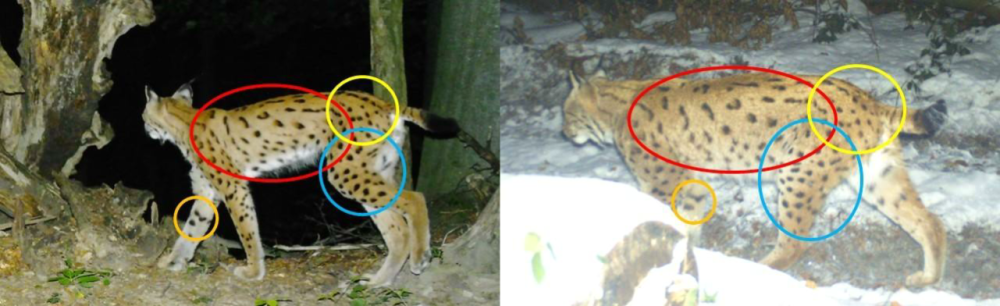
Identification and confirmation of the same lynx at two different camera trap locations, based on its unique coat pattern (photo © TUZVO), Source: Pilot action implemented in the East Carpathians on the monitoring, poaching prevention and conflict prevention of lynxes
It was these markings that recently revealed something remarkable in the Eastern Carpathians. During a joint monitoring effort carried out by WWF and its partners, researchers discovered that the same male Eurasian lynx had been photographed in protected areas in Poland, Slovakia and Ukraine. The animal was recorded in Poland's Bieszczady National Park, Slovakia's Poloniny National Park and Ukraine's Uzhanskyi National Nature Park.
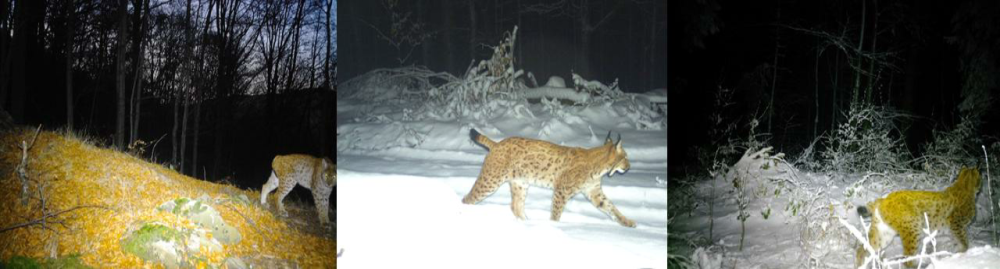
Photographs of one individual male lynx recorded in all three areas Bieszczadzki NP in Poland (left), Poloniny NP in Slovakia (centre), and Uzhanskyi NNP in Ukraine (right). © Interreg LECA / Technical University in Zvolen / WWF-Ukraine / Uzhansky National Nature Park. Source: Pilot action implemented in the East Carpathians on the monitoring, poaching prevention and conflict prevention of lynxes
The findings come from a scientific assessment carried out between spring 2023 and spring 2026 as part of the EU co-funded LECA project, which supports the coexistence and conservation of large carnivores in the Carpathian region.
"Without coordinated monitoring, it would be very easy to count the same lynx multiple times or miss important movements across borders. Recognising individual animals through their unique coat patterns allows us to understand how the population really uses the landscape and why cooperation between countries is so important." Ihor Dykyi, wildlife expert from WWF-Ukraine.
The travelling lynx has recently been given a nickname by WWF researchers from Poland, Slovakia and Ukraine: Karpat. Inspired by the mountain range that connects all three countries, the name serves as a reminder that conserving the Carpathian lynx requires the same cross-border cooperation that allows the population to thrive.
Karpat was not the only traveller. Researchers also documented two additional males moving between Poland and Slovakia, while another individual was recorded in both Slovakia and Ukraine.
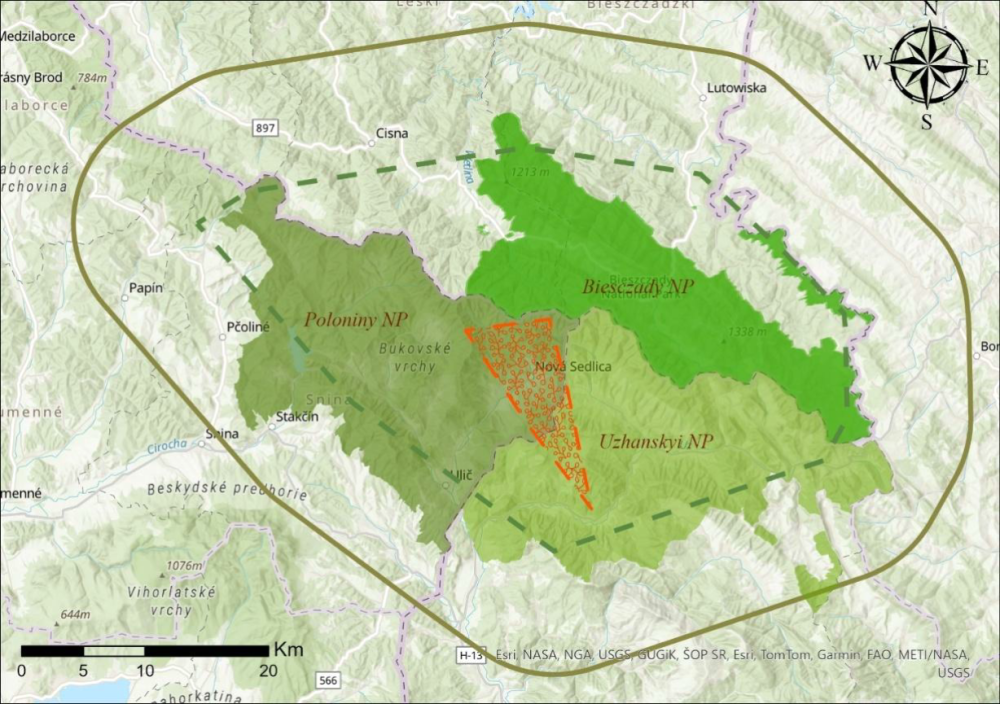
Monitored area (dashed green) and buffer area (Green line) with the spatial behaviour and habitat use of a resident adult male lynx (red doted area), documented through camera-trap detections during deterministic monitoring and visualised as a 100% Minimum Convex Polygon, confirm a well-defined home range extending across the transboundary area of Poloniny National Park and Uzhanskyi National Nature Park. Source: Pilot action implemented in the East Carpathians on the monitoring, poaching prevention and conflict prevention of lynxes
The mountains and forests of the Eastern Carpathians stretch across Poland, Slovakia and Ukraine, forming one of Europe's largest remaining connected landscapes. The recent monitoring findings suggest that the lynx living in this region do not exist as separate national populations. Instead, they form a single interconnected population spanning multiple countries.
"When we look at a map, we see borders. When a lynx looks at the Carpathians, it sees one home.", comments Branislav Tám from WWF Slovakia who has dedicated decades on researching and protecting large carnivores. "The future of the Carpathian lynx will not be decided by borders. It will be decided by whether we leave enough room for nature to remain connected".