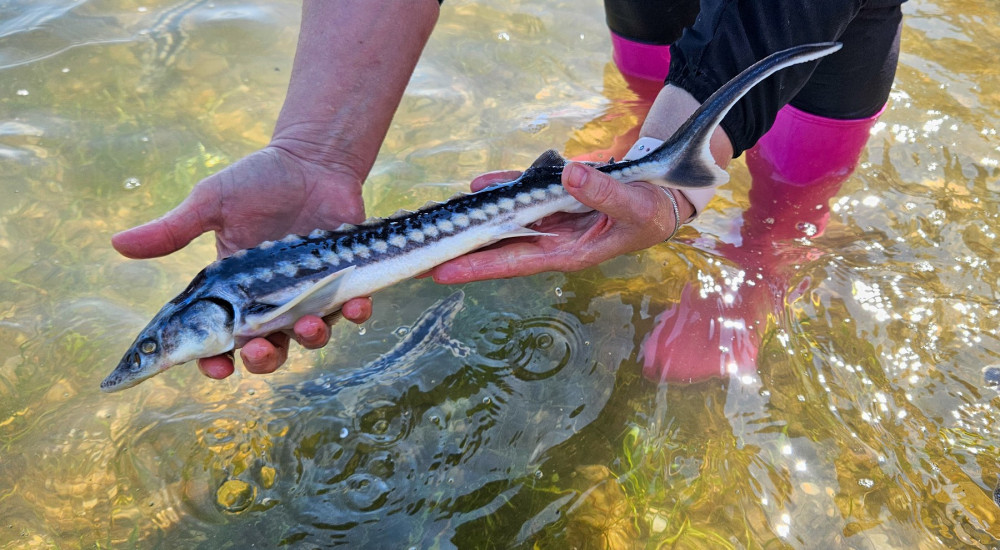
The Lower Danube remains one of the last places in Europe where wild populations of this globally endangered species still survive
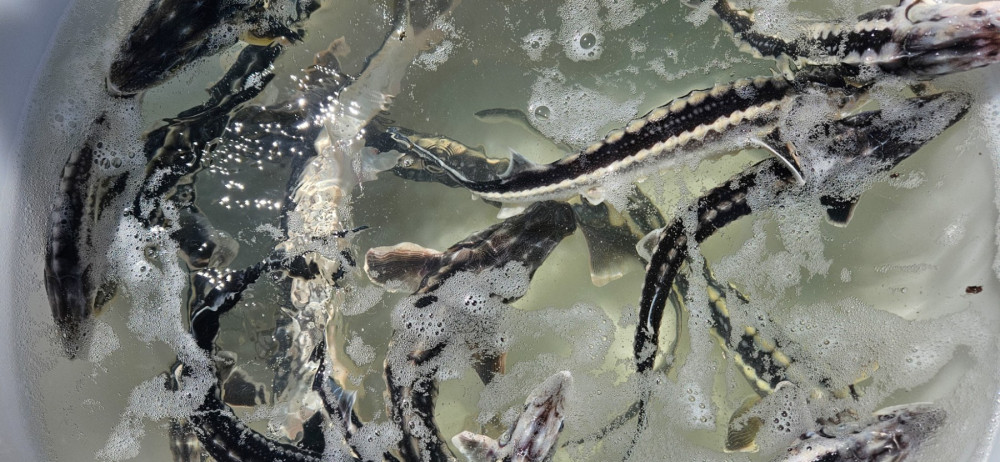
To mark World Migratory Fish Day, celebrated this year on 23 May, BOKU University, WWF and their partners released around 30,000 juvenile Russian sturgeons (Acipenser gueldenstaedtii), a critically endangered species, into the Danube River. The release took place near the village of Gomotartsi, close to Vidin, Bulgaria, an area that hosts one of the species’ most important remaining habitats.
The initiative is part of the international LIFE-Boat4Sturgeons project, funded under the European Union’s LIFE Programme. The project aims to support the recovery of Danube sturgeon populations through the establishment of broodstock of the remaining four Danube sturgeon species and a conservation breeding and release programme. This release marks another mileston in the ambition of the project to release 1,6 Mio sturgeons from all four species in the Danube basin until 2030.
“Joining forces across countries and sharing the efforts and resources needed to maintain broodstock, rear fish, and organise their release is the real strength of the LIFE Boat project,” says Beate Striebel, WWF Sturgeon Initiative Lead. “In an international river basin like the Danube, we need to move beyond a situation where each country works in isolation and instead build a truly common initiative.”
The parent fish, with gentically verifed Danube origin are held in a floating sturgeon breeding facility in Austria and in pond facilities in Hungary to minimse risks for the fish. The released fish are offspring of this broodstock and were transported from Austria to Bulgaria for release in the Lower Danube. The event brought together representatives of Bulgaria’s Executive Agency for Fisheries and Aquaculture, the Regional Food Safety Directorate in Vidin, and the Regional Inspectorate of Environment and Water in Montana.
The Russian sturgeon was once the most widespread sturgeon species in the Danube River. It regularly migrated upstream as far as Bratislava, with individual specimens recorded even near Vienna and Regensburg. Today, the species is listed as Critically Endangered on the International Union for Conservation of Nature (IUCN) Red List.
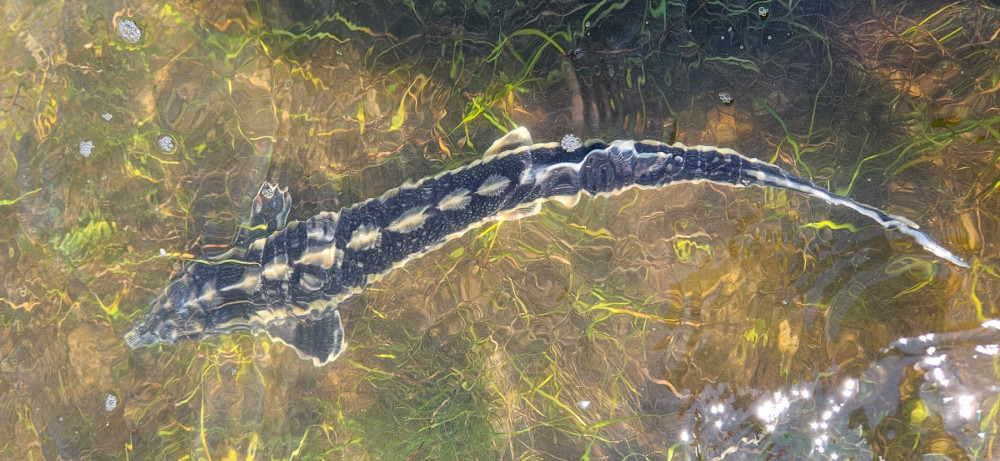
Sturgeons are among the most ancient animal species on Earth, dating back to the time of the dinosaurs. For centuries, they have held significant economic and cultural importance in countries with native sturgeon populations. Today, however, the Lower Danube remains one of the last places in Europe where wild, naturally reproducing sturgeon populations still survive. Their decline has been driven primarily by poaching, habitat loss, and the disruption of migratory routes caused by infrastructure such as dams and hydropower plants.
For more than 15 years, WWF has been working to conserve sturgeon populations in the Danube through scientific monitoring, restocking efforts, anti-poaching activities, and the protection of key habitats.
In Bulgaria, the organization contributed to the introduction of a permanent ban on sturgeon fishing in waters of the Danube and the Black Sea. WWF is also working towards the designation of new protected areas. In 2022, following a proposal by WWF and after a decade of collaboration with local fishing communities and responsible institutions, the protected area “Sturgeons-Vetren” in Bulgaria was officially established. The organisation is currently advocating for the designation of a second protected area near the village of Gomotartsi to support the long-term survival of the species.
At the same time as the release, WWF Romania co-organised an international conference dedicated to migratory fish conservation together with the Institute of Research and Development for Aquatic Ecology, Fishing and Aquaculture (ICDEAPA) and the Natural Sciences Museum Complex "Răsvan Angheluță" Galați. Bringing together national and international experts, the event focused on the urgent need to protect the Danube’s migratory fish species, particularly critically endangered sturgeons, and highlighted ongoing conservation and restoration efforts across the region.
More information about the LIFE-Boat4Sturgeons project
The LIFE-Boat4Sturgeons project aims to prevent the extinction of the four remaining sturgeon species in the Danube River. Between 2022 and 2030, six conservation measures will be implemented to support the recovery of sterlet, stellate sturgeon, beluga sturgeon, and Russian sturgeon populations.
Project partners include the University of Natural Resources and Life Sciences, Vienna (BOKU), Austria’s Federal Ministry of Agriculture, Forestry, Regions and Water Management, viadonau, the City of Vienna, WWF-Austria, WWF-Bulgaria, WWF-Romania, WWF-Ukraine, Revivo, and Hungarian University of Agriculture and Life Sciences (MATE).
The majority of the project’s funding is provided by the European Union through the LIFE Programme. More information: https://lb4sturgeon.eu/bg/

Funded by the European Union. Views and opinions expressed are, however, those of the author(s) only and do not necessarily reflect those of the European Union or the granting authority, the European Climate, Infrastructure and Environment Executive Agency (CINEA). Neither the European Union nor the granting authority can be held responsible for them.