Around the world, people often associate the iconic panda logo with protecting distant wildlife such as tigers, elephants, or orangutans. Yet some of WWF’s most remarkable conservation successes over the past two decades have taken place much closer to the heart of Europe, in the great landscapes of the Danube Basin and the Carpathian Mountains, where ancient forests, free-flowing rivers, and rare wildlife still survive alongside vibrant cultures and communities.
Twenty years ago, the World Wide Fund for Nature established offices in Bulgaria and Romania, beginning a long-term commitment to protecting some of Europe’s richest and most threatened natural treasures. From safeguarding old-growth forests and restoring wetlands to protecting bears, wolves, lynx, sturgeons, and bringing European bison back to the wild, WWF teams in the two countries have helped shape one of Europe’s most important conservation stories.
Their work has not only protected wildlife and habitats, but also supported local communities, improved river management, strengthened environmental laws, advanced climate adaptation, and helped reconnect people with nature in a rapidly changing world.
This year, WWF celebrates 20 years of impact in Bulgaria and Romania through more than 20 success stories achieved by the scientists, conservationists, communicators, experts, partners, supporters and local communities who made them possible.
This is also a moment to express our heartfelt thanks to everyone who has been part of this journey. Without your commitment, trust, and support, none of these achievements would have been possible.
#1 Bulgaria protects over 100,000 hectares of old-growth forests
Thanks to WWF and its partners, more than 100,000 hectares of state old-growth forests received protection in Bulgaria. This area is larger than all nature reserves in the country combined. Some of Bulgaria’s most valuable biodiversity hotspots and natural carbon sinks were preserved for future generations.
#2 Four million newly planted trees for the future
WWF and partners planted more than 4 million saplings of native tree species across Bulgaria. The campaigns united institutions, volunteers, companies, and citizens around the restoration of Bulgarian forests. Every new tree is an investment in a more resilient environment and healthier future for people.
#3 Six rescued bear cubs got a second chance
Six orphaned bear cubs were rescued and successfully returned to the wild thanks to the intervention of WWF and partners. Their stories touched thousands of people across Bulgaria and inspired greater appreciation for the country's wildlife.
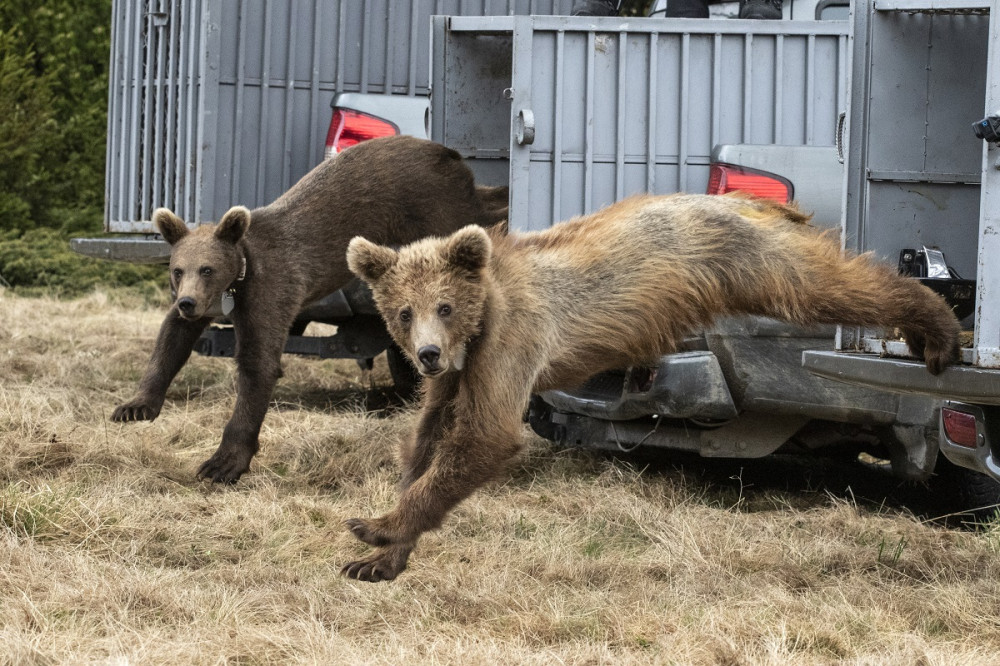
Photocredit: Hristo Vladev, Four Paws
#4 Ten municipalities said “No” to logging in old forests
Following WWF’s efforts, ten Bulgarian municipalities banned logging in old forests on their territories. Among them are Botevgrad, Sevlievo, Kyustendil, Tryavna, Harmanli, Veliko Tarnovo, Gorna Malina, Pirdop, Zlatitsa, and Ihtiman. The decision showed that local authorities can become key allies in protecting nature.
#5 124,000 young sturgeons were released into the Danube
Beluga, stellate, and Russian sturgeons of verified Danube origin were released into the river to help restore critically endangered populations. WWF has worked for years to protect one of the planet’s oldest and most threatened fish species. Every release of young sturgeons brings new hope for the future of the Danube.
#6 Two thousand young people joined the nature movement
WWF engaged more than 2,000 young people in environmental education, volunteer actions, and conservation campaigns, helping nurture a new generation of nature advocates in Bulgaria.
#7 Six new protected areas were established
As a result of WWF’s work, six territories covering nearly 800 hectares received protected status. This means greater security for rare species and valuable habitats.
#8 WWF wins four court cases for Pirin national park
WWF won four major legal cases linked to the protection of Pirin National Park, including two concerning the park’s management plan and two related to illegal logging activities. The victories became an important example of how environmental law can defend some of Europe’s most valuable mountain ecosystems. Pirin remains one of Bulgaria’s greatest natural treasures.
#9 WWF exposes illegal logging in Bulgaria
WWF published three major reports on illegal logging in Bulgaria in 2014, 2018, and 2023. The analyses documented persistent illegal logging practices, identified weaknesses in forest governance and enforcement, and highlighted risks to some of the country's most valuable forest ecosystems. Their findings informed public debate and supported calls for stronger forest protection and oversight.
#10 Bulgaria’s first major wildlife crime analysis
WWF experts prepared Bulgaria's first comprehensive analysis of crimes against wildlife, including concrete recommendations for improving prevention and enforcement. Based on official data and expert interviews, the report revealed significant gaps in the detection, prosecution, and sanctioning of wildlife crime, helping bring greater attention to a largely overlooked threat to protected species and ecosystems.
#11 Supporting families facing energy poverty
Together with partners, WWF supported 60 energy-poor households with cleaner heating solutions and improved energy efficiency. The initiative showed that climate action and social support can go hand in hand.
#12 Three restored river sections
WWF restored three river sections in Bulgaria, two along the Cherni Lom River and one on the Veselina River. Restoring rivers helps nature recover and ensures healthier ecosystems for future generations.
#13 WWF helps expand responsible forest certification
Hundreds of thousands of hectares of forests in Bulgaria were certified under the FSC system with WWF’s contribution. Over the years, WWF also trained more than 200 forestry professionals in responsible forest management practices. The initiative helped push sustainability standards further into the forestry sector.
#14 Helping the European Bison Return
After nearly 200 years of absence, the European bison has returned to the Southern Carpathians. Today, around 250 individuals roam freely in the Tarcu Mountains — one of the largest free populations in Europe — through a long-term reintroduction programme.
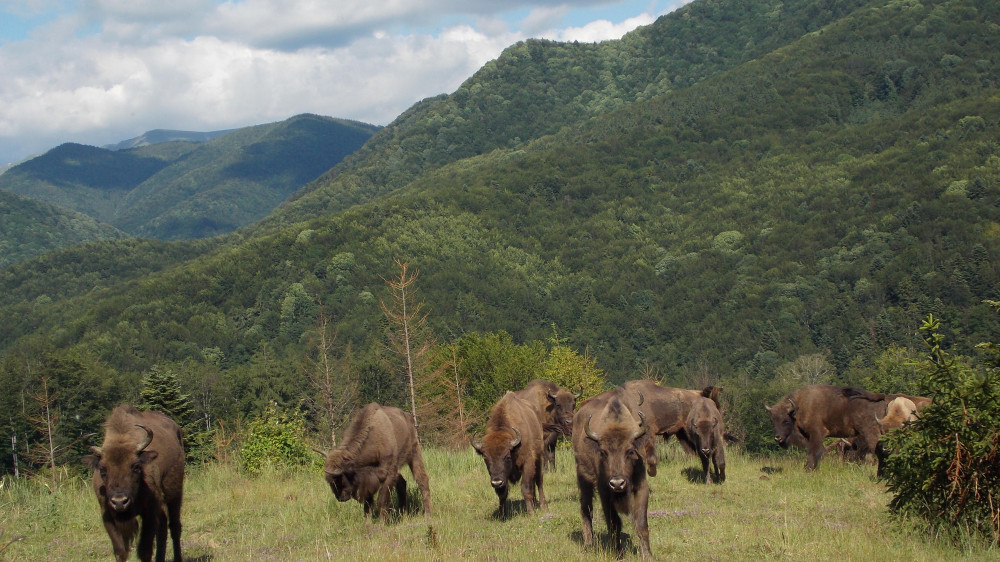
Photocredit: Adrian Grancea, WWF-Romania
15# Building a Model for Community-Led Development
WeWilder, the first social enterprise established by WWF-Romania together with a local community in the South-Western Carpathians, was selected to represent Romania in the European Parliament as a leading example of local development. MuMA Hut, part of the same project, was nominated for the prestigious European architecture awards Mies van der Rohe.
#16 Romania helps shape over 400 environmental policies and laws
Over the past 20 years, WWF-Romania directly contributed to more than 400 public policies and legislative initiatives related to forests, rivers, biodiversity, climate adaptation, agriculture, and protected areas. The organisation helped align Romania’s environmental legislation with European standards after EU accession and contributed to major national strategies shaping the country’s environmental future.
#17 Romania builds one of Europe’s most advanced timber tracking systems
With WWF’s support, Romania became one of Europe’s leaders in digital timber traceability through the SUMAL system. Paper documentation was replaced with real-time digital tracking, creating one of the world’s most advanced forest transparency systems. The initiative became an important tool in the fight against illegal logging.
#18 Romania identifies 300,000 hectares of high conservation value forests
WWF-Romania helped identify and support the management of around 300,000 hectares of High Conservation Value Forests. These landscapes include some of Europe’s most important habitats for biodiversity and climate resilience. Local communities also became more involved in the protection and governance of forests.
#19 Forest communities gain recognition in national law
For the first time in Romania’s forestry policy history, forest-dependent communities were officially recognised in the Forest Code and National Forest Strategy with WWF’s contribution. The change acknowledged the important role local people play in sustainable forest management. Conservation and community needs became more closely connected.
#20 Romania creates ecological corridors for bears, wolves and lynx
WWF-Romania identified the country’s first ecological corridor network for large carnivores, allowing bears, wolves, lynx, and other species to move safely between habitats. The initiative was recognised by the European Commission as a best-practice model for ecological connectivity.
#21 More than 30,000 young people join environmental programmes
Over 30,000 young people participated in WWF-Romania educational programmes focused on climate, biodiversity, and environmental action. Initiatives such as Climate Heroes, Zero Plastic Ambassadors, and Tracking Academy helped inspire a new generation of environmental leaders. Hundreds of young people later proposed concrete climate solutions to local authorities in 12 cities.
#22 More than 100 companies become conservation partners
Over 100 companies partnered with WWF-Romania to support conservation and sustainability initiatives. Businesses increasingly became active participants in protecting forests, rivers, biodiversity, and climate resilience. The partnerships demonstrated how environmental protection can unite civil society and the private sector around shared goals.
#23 Romania strengthens protection against illegal sturgeon fishing
WWF contributed to stronger legislation and penalties against illegal fishing, transport, and possession of sturgeon. The organisation helped place wildlife crime and Danube sturgeon conservation higher on the national agenda. Protecting these ancient migratory fish became both a biodiversity and rule-of-law issue.
#24 Romania bans small hydropower plants in protected areas
WWF-Romania contributed to legislative changes banning micro-hydropower plants in protected areas and excluding them from EU funding eligibility. The decision helped protect valuable rivers, habitats, and biodiversity hotspots from destructive infrastructure development. Romania became part of a wider European discussion about balancing renewable energy and nature protection.
#25 WWF helps bring biodiversity into national climate planning
WWF-Romania contributed to the National Climate Change Adaptation Strategy 2030, the National Integrated Energy and Climate Plans, and other key policy frameworks. Biodiversity and climate resilience became more strongly integrated into Romania’s long-term planning. Nature-based solutions increasingly entered mainstream policy discussions.
#26 WWF supports green infrastructure for flood and river management
WWF helped integrate green infrastructure measures into river basin management and flood-risk planning in Romania. The organisation promoted nature-based solutions as part of climate adaptation and water management strategies. Healthy rivers and wetlands increasingly became recognised as critical infrastructure for people and nature.
#27 Bringing back water for local communities and wildlife
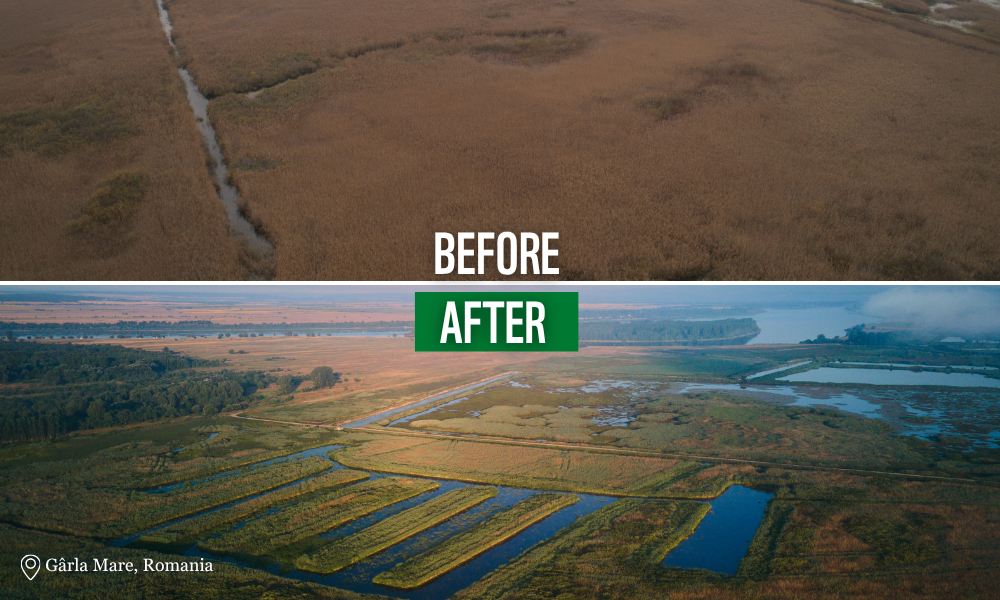
Nestled along the Danube River, the Gârla Mare wetland was gradually drying up. Years of fish farming modifications isolated the natural marsh from the river, turning it from a rich wetland ecosystem into a desiccated reed bed and leaving it vulnerable to further degradation. WWF-Romania reintroduced vital water flow, reinforced flood defenses, and dredged new areas to diversify habitats. As a result: 400 hectares of marshland were revived, flood storage capacity was boosted to 5.2 million m³, communities downstream are now better protected. Today, the wetlands are thriving once again, with species like the Eurasian otter and fire-bellied toad returning to their natural home.